

Quick Answer: Choose a solid patio cover if you want full shade and protection from rain, especially over a hot, west-facing patio. Choose an open lattice patio cover if you want filtered light and airflow for gardens, walkways, or a brighter dining area. The right answer for solid vs lattice patio cover comes down to three things: how much sun your patio gets, what’s already planted around it, and how you plan to use the space.
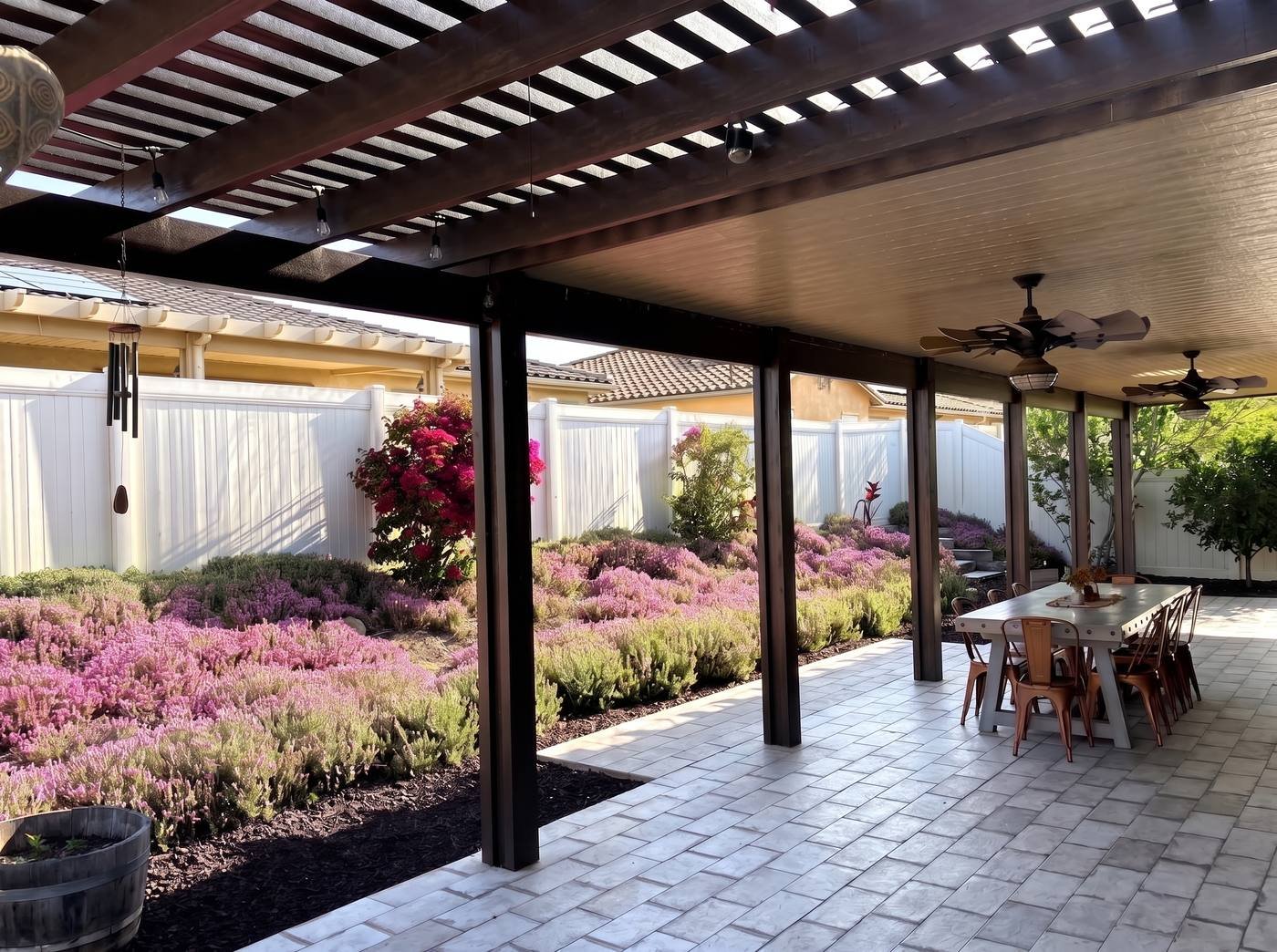
Open lattice cover built beside a solid aluminum roof at a Western Riverside County home.
If you’re planning a patio cover in Western Riverside County, one of the first questions you’ll face is which style to build. Elite Patios installs both solid and lattice aluminum covers from brands like Alumawood, Duracool, and 4K, so we see homeowners weigh this choice every week. Both styles are durable and good-looking. They just shade your yard in very different ways.
This guide walks through what each style actually does, then helps you match it to your sun, your landscaping, and the way your family lives outdoors. At the end you’ll find a short checklist to work through before you request a quote.
Solid patio covers: full shade and weather protection
A solid patio cover has a continuous aluminum roof that blocks direct sunlight across the covered area and shelters you, your furniture, and your grill from rain. In Western Riverside County and across the Inland Empire, that shade is especially welcome on west-facing patios, where afternoon sun tends to hit hardest.
With protection from sun and rain, a solid cover makes your patio feel like an extension of your indoor living space. You can relax outside on a summer afternoon or watch a winter storm roll through with a blanket and a cup of coffee. Elite builds solid covers in a range of colors and styles to complement your home.
A full roof does have trade-offs. It can limit airflow and reduce natural light beneath the cover and through nearby windows. Some homeowners prefer that deeper shade, while others want a brighter, more open feel.
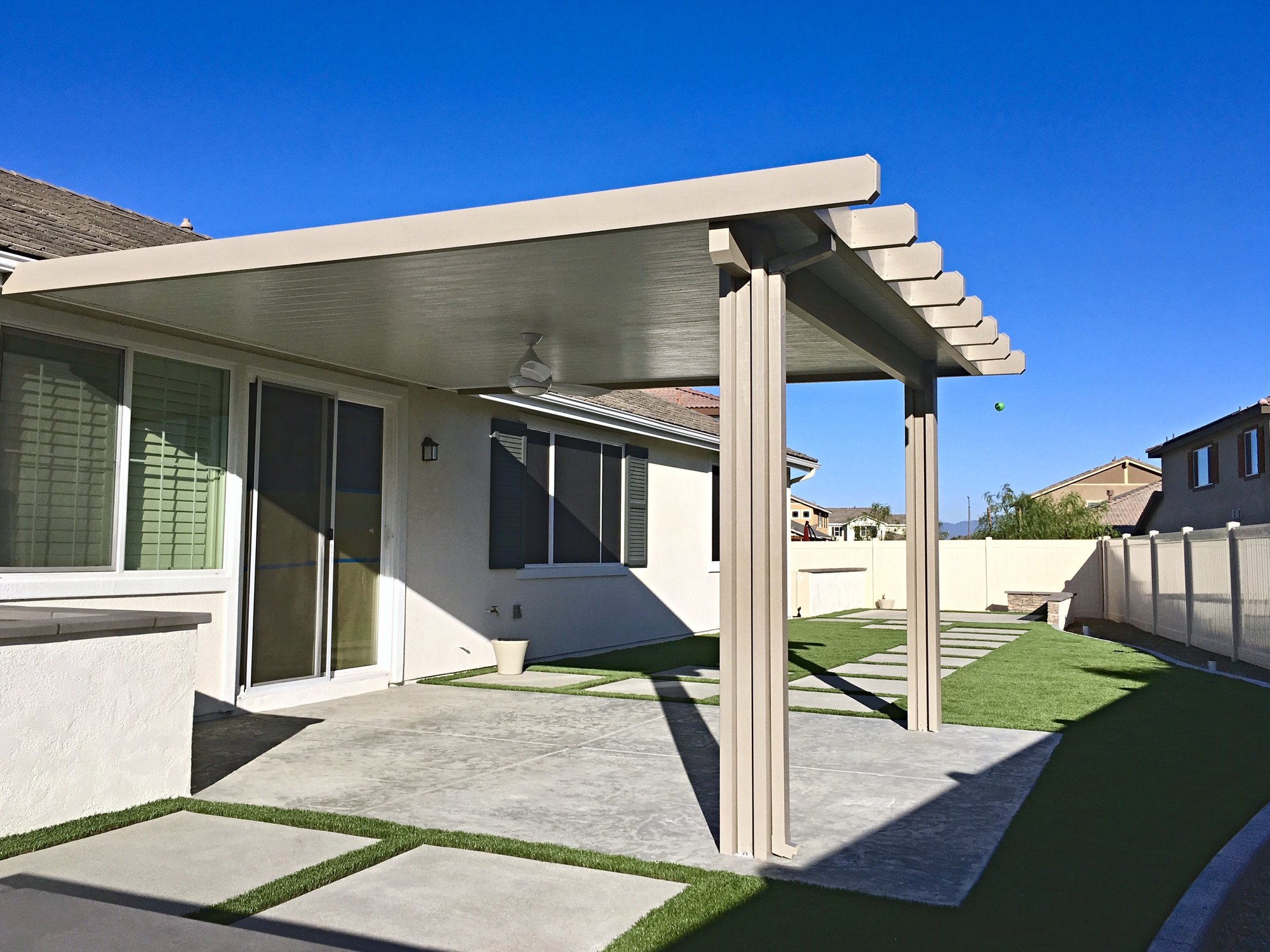
Solid aluminum patio cover attached to the home
Open lattice patio covers: filtered light and airflow
A lattice patio cover uses a crisscrossed aluminum pattern that lets part of the sunlight and rainfall pass through. Elite describes its lattice covers as typically offering 40 to 60 percent sun coverage, giving you a mix of sun and shade with a more open, airy feel.
Lattice is a natural fit for gardens, walkways, and dining areas that should stay bright. The pattern casts a soft, shifting shadow that many homeowners love, and it adds a decorative touch to the back of the house. Elite installs aluminum lattice systems in a variety of colors and sizes to choose from.
The trade-off is that lattice won’t keep you dry in the rain, and on the hottest afternoons you’ll still feel some direct sun coming through.
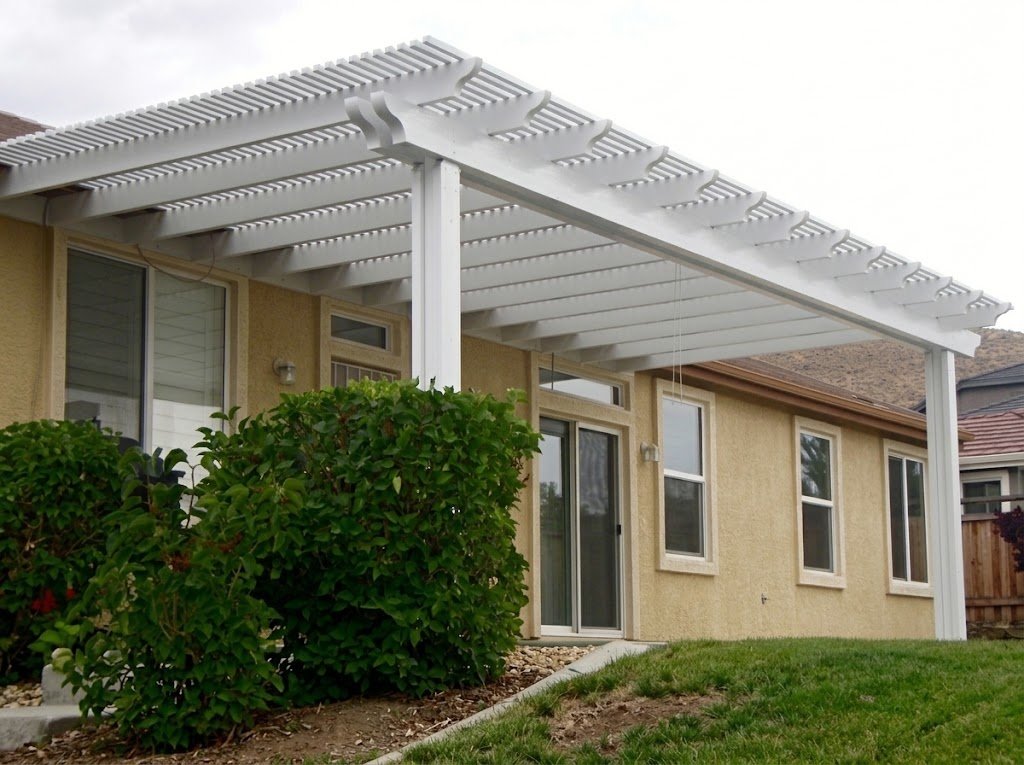
White lattice patio cover with open rafters
Solid vs. lattice at a glance
- Shade: Solid gives full shade. Lattice gives partial, filtered shade.
- Rain: Solid keeps rain off. Lattice lets rain pass through.
- Airflow and light: Lattice keeps the space bright and breezy. Solid can feel cooler but darker.
- Plants: Lattice lets light reach plants below. Solid can shade them out.
- Cost: Lattice is often the more economical style. For current price ranges, see Elite’s Riverside County cost guide.
How sun exposure points you toward a style
Start by watching your patio for a day. Where does the sun land at noon, and where is it at 4 p.m.?
If your patio faces west or southwest, it probably takes the full force of the afternoon sun, and that’s often when you most want to be outside. This is where a full shade patio cover earns its keep. Elite’s guidance points homeowners with west-facing seating toward solid covers when heat is the main problem.
If your patio faces north or east, or already gets afternoon shade from the house or a big tree, you may not need a full roof. Open lattice can soften the morning sun while keeping the space from feeling cave-like.
Also think about the rooms behind the patio. A solid cover over a sliding door can keep the kitchen or family room cooler, but it will also make it darker inside. If you love natural light indoors, lattice may be the better neighbor for those windows.
How your existing landscaping fits in
Your yard’s plants matter more than most people expect. Roses, herbs, vegetable beds, and flowering shrubs near the patio usually need real sunlight. Putting a solid roof over or right beside them can leave them struggling. Lattice lets light reach them while still taking the edge off the heat.
Mature trees work the other way. If a large tree already shades part of the patio, a lattice cover can fill in the gaps without making the space too dark. If you’re worried about leaves and debris collecting, talk that through during your design visit so the layout makes sense for your yard.
Think about walkways too. A lattice cover over a side path or garden walk looks great and keeps the route pleasant without closing it in.
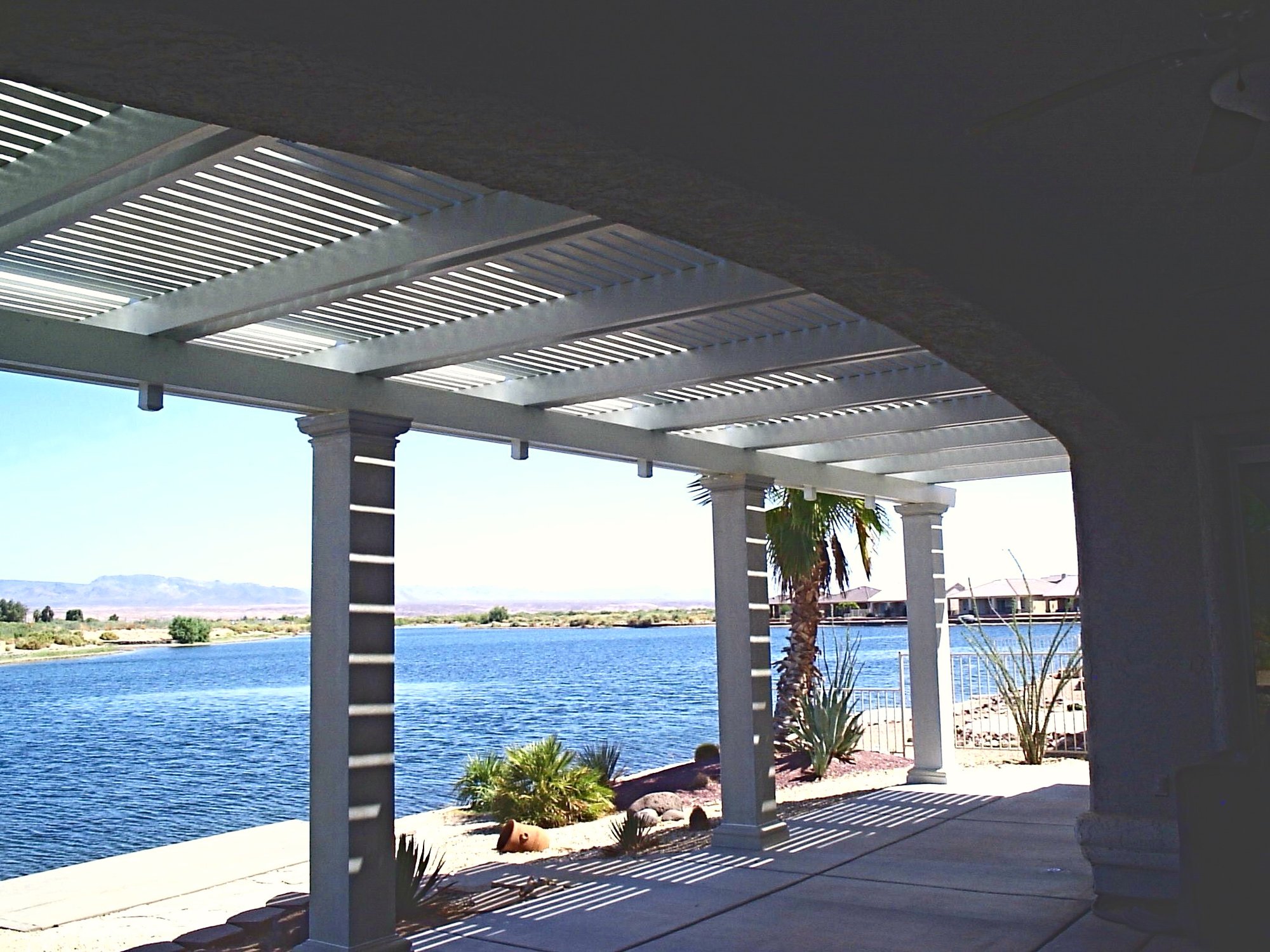
Underside view of a white lattice patio cover
How you’ll use the space: dining, lounging, and outdoor kitchens
How you live outside is often the deciding factor.
Outdoor dining. If you mostly eat outside in the evening, lattice can keep the table bright and breezy. If you host lunches or afternoon gatherings in summer, or want the table usable after a rain, solid gives you dependable shade and a dry surface.
Lounging. A reading nook or a spot to relax in the sun can feel just right under lattice. If your lounge area is where you go to escape the heat, or you plan to add outdoor furniture and cushions you’d rather keep dry, solid tends to be the better match.
Outdoor kitchens. Grills, appliances, and countertops do best with protection overhead. Many homeowners put a solid roof over the kitchen so they can cook in any weather, then keep an open feel elsewhere.
That last idea is where a combination patio cover comes in. A combination cover mixes solid and lattice in one design, for example a solid section over the kitchen or main seating and lattice over a garden edge. We cover that option in detail in our post on combination patio covers vs. solid and lattice patio covers.

Solid aluminum cover over a built-in outdoor kitchen
Which patio cover style is best for you?
There’s no single best style. Which patio cover style is best depends on your yard. As a rule of thumb:
- Choose solid if heat and afternoon sun are your main problem, you want rain protection, or you’re covering an outdoor kitchen or furniture you want to keep dry.
- Choose lattice if you want filtered light, airflow, healthy plants nearby, and a brighter patio and interior, or if budget is a priority.
- Consider a combination if different parts of your patio have different jobs.
Your decision checklist before a quote
Run through these questions before your design visit. Your answers will make the conversation faster and help you compare options side by side.
1. Which direction does the patio face, and when does it get the most sun?
2. Is rain protection important, or is shade alone enough?
3. Are there plants, trees, or garden beds near the patio that need sunlight?
4. Will the cover sit outside windows or doors where you want to keep natural light?
5. How will you use the space most: dining, lounging, cooking, or all three?
6. Do you have outdoor furniture, cushions, or appliances that need to stay dry?
7. Do you have an HOA, and do its guidelines limit style or color?
8. Do you have a color in mind to match your home’s trim or roof?

Combination cover pairing a solid roof with open lattice
Ready to compare styles for your yard?
Every yard is different, and seeing your patio in person is the easiest way to sort out sun angles, plants, and how you’ll use the space. Our team can walk you through solid, lattice, and combination options and show you how each would look on your home.
Not sure which style fits your yard? Request a free patio cover estimate and we’ll help you compare options.
Prefer to talk it through? Call Elite Patios at (951) 837-6180.
Frequently Asked Questions
What’s the main difference between a solid and a lattice patio cover?
A solid cover has a continuous roof that gives full shade and keeps rain off. A lattice cover uses a crisscrossed pattern that lets some sun and rain through, giving partial shade and better airflow.
Is a solid or lattice patio cover cooler?
A solid cover blocks direct sun across the whole area, and Elite’s guidance points to it for the biggest temperature drop on west-facing patios. Lattice lets in more air but also more sun.
Does a lattice patio cover keep rain off?
No. Lattice lets rainfall pass through. If you want to stay dry, choose a solid cover or a combination design with a solid section where it matters most.
Which is more affordable, solid or lattice?
Elite’s cost guide notes that lattice is often the more economical style. Your exact price depends on size, materials, and site, so the best way to compare is a free estimate.
Can I have both solid and lattice in one cover?
Yes. A combination patio cover blends solid and lattice sections in one design. See our combination vs. solid and lattice guide for details.